Non-contact Shaft Measurement (Relative Vibration & Position)
LoopChecker KS04
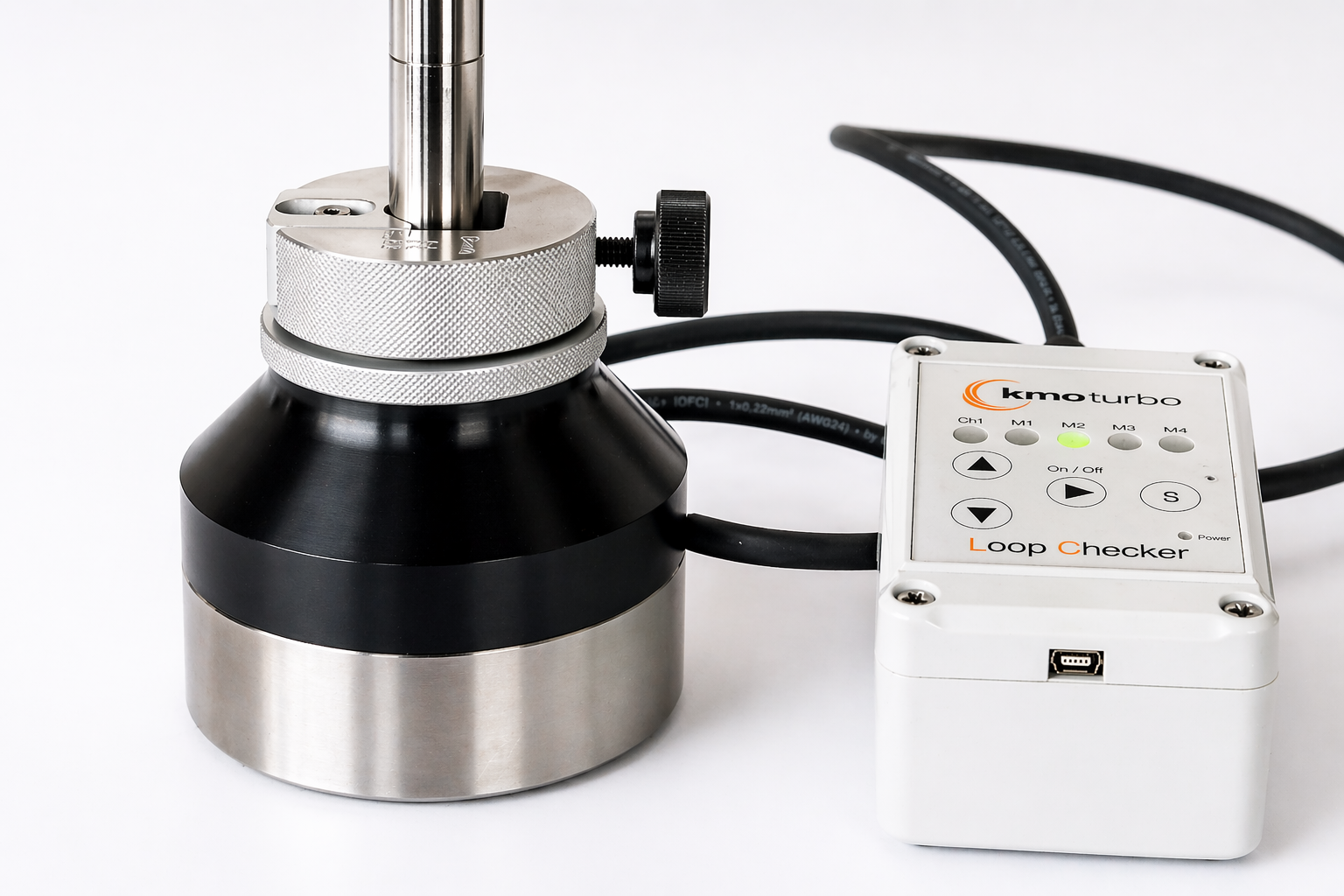
Highlights:
REALISTIC SIMULATION OF SHAFT VIBRATIONS UP TO 250 µm PEAK-TO-PEAK
DYNAMIC TESTING OF THE COMPLETE MEASUREMENT CHAIN UP TO THE DISPLAY AND LIMIT VALUE MONITORING
SETTING DEFINED VIBRATION AMPLITUDES VIA RMS SIGNAL (MULTIMETER-BASED)
TESTING WITHOUT REWIRING – USING THE ORIGINAL WIRING
HIGH ACCURACY, DEPENDENT EXCLUSIVELY ON THE MULTIMETER USED
COMPACT, BATTERY-POWERED SYSTEM WITH INTUITIVE OPERATION
FOUR FREELY ASSIGNABLE QUICK ACCESSES FOR TYPICAL TEST VALUES
Applications:
Functional testing of vibration monitoring systems, simulation of shaft vibrations in turbocompressors, checking limit values and alarm chains, commissioning of vibration measurement systems, troubleshooting discrepancies between display and actual behavior, testing of transmitters and PLC evaluation, service and maintenance operations on turbomachinery
Description
Simulate vibrations – instead of blindly trusting them
The LoopChecker KS04 is a practical vibration simulator for dynamic testing of eddy current measurement systems – from the probe to the display and limit value triggering.
In contrast to static test methods, the LoopChecker generates a defined, sinusoidal vibration directly in the measurement system. This allows not only the sensor technology but also the entire chain of cabling, transmitter, evaluation, and display to be tested realistically.
The vibration amplitude is set via the generated RMS voltage signal and measured with a multimeter. Using known relationships between the RMS value and peak-to-peak vibration, the actual amplitude can thus be precisely specified.
A decisive advantage: Testing is performed without rewiring – using the originally installed wiring. This directly reveals typical errors such as incorrect parameterization, defective transmitters, or faulty signal processing if the display and simulated signal do not match.
The achievable accuracy is higher than the usual system accuracy of vibration measurements themselves. This makes the LoopChecker ideal for checking limit values and ensuring critical operating conditions.
Relevant practical questions and further guidance
Our FAQs provide initial guidance. If you want to delve deeper, contact us – the real solutions emerge through dialogue.
Not just the probe – but the entire signal chain:
Probe → Cable → Driver → Display → Limit Logic.
It simulates real wave oscillations, revealing whether the system responds correctly.
Because they both serve entirely different purposes:
- SensiChecker = static sensitivity check
- LoopChecker = dynamic functional test of the overall system
Both are absolutely essential together.
The LoopChecker generates a sinusoidal motion, which the probe detects as a real wave vibration.
The system 'thinks' the machine is running – even though it's stationary.
No.
A system can display values – and still react completely incorrectly, for example, with limit values or scaling.
The memory slots are only approximate values for quick setup – the exact setting is always made using the measured RMS signal.
Dangerous.
Without reference to the actual measurement circuit sensitivity (e.g., 8 mV/µm), the set values are physically meaningless.
Because the conversion from voltage to vibration depends on it.
Without this information, you are not testing the machine – but a false assumption
Because the system measures electrically.
The vibration is detected as a voltage signal – and the multimeter measures the RMS value of this signal, which is then converted into µm.
Surprisingly high.
The accuracy practically only depends on the multimeter – and is therefore often better than the system accuracy of the vibration measurement itself.
No – and that is often overlooked.
It is primarily a trend instrument, not a precision measuring device.
That's precisely why effective threshold monitoring is crucial.
It works with the original wiring, without re-wiring.
This prevents errors and accurately identifies the problems that are relevant during operation.
Because limits determine whether to shut down or continue operation.
If they are incorrect, either the machine is at risk – or operation is unnecessarily restricted.
All things that often go unnoticed during normal operation:
- incorrect parameterization in the control system
- defective or incorrectly scaled transmitters
- wiring errors
- faulty limit value logic
No – but it requires understanding.
Once you understand the principle, you can check very quickly and efficiently.
You trust a system that, in a critical situation, fails to respond –or shuts down precisely when it shouldn't.
Downloads
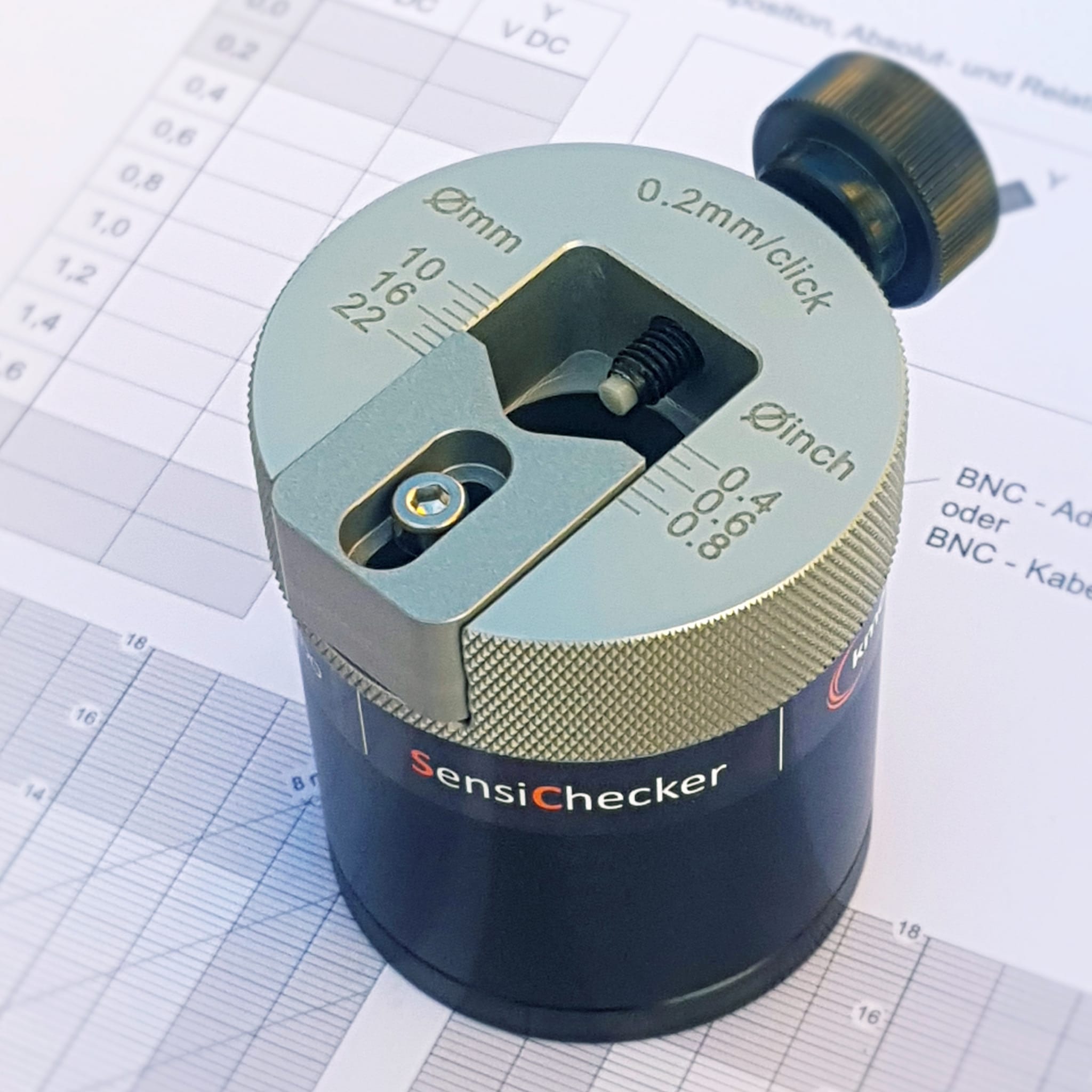
You can download product information here. Please feel free to contact us for any further inquiries!