
kmo Reverse-Flow Protection – for reliable protection
The reliability of a kmo anti-surge system stems from the fact that, in addition to absolute values, relative changes are also monitored.
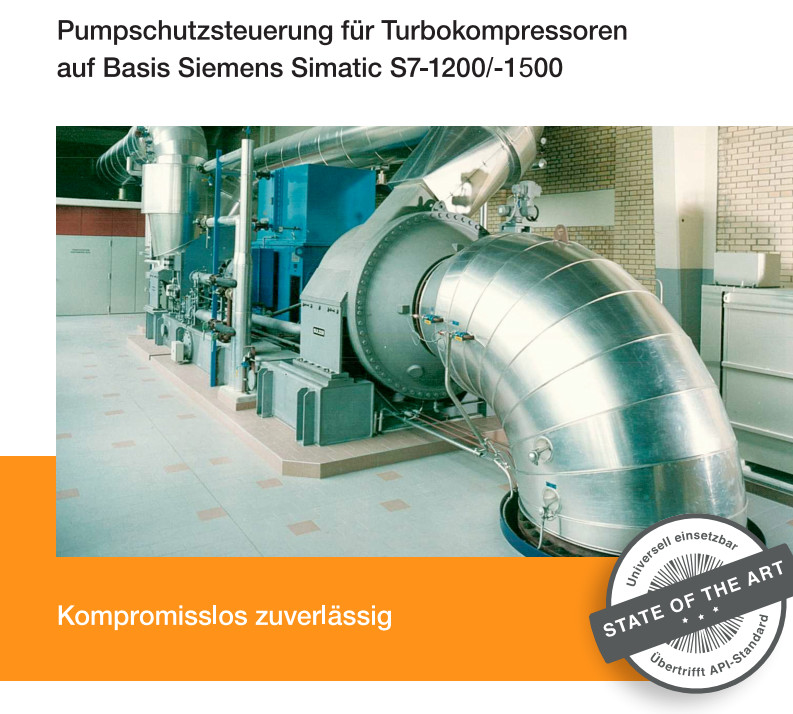
The kmo anti-surge system ensures that a turbo compressor remains controllable even when operation becomes unstable.
During stable operation, the anti-surge control system takes over. However, as soon as the compressor approaches or exceeds the surge limit – for example, due to faulty measurement signals – the behavior changes fundamentally: A controllable process turns into a dynamic, unstable state. The kmo anti-surge system is specifically designed for this moment.
Instead of relying on rigid limit values, the system analyzes the actual behavior of the compressor. Multiple measured variables are evaluated in parallel – not only their absolute values, but especially their changes over time. This allows incipient surging to be detected early and unambiguously, even under real operating conditions with unavoidable measurement deviations.
The response is graduated and without delay: first stabilization, then targeted unloading or shutdown if necessary. This creates a protection concept that not only safeguards the compressor but also maintains plant availability.
All relevant signals around a surge event are recorded and clearly presented. This reveals what actually happened at the critical moment – providing a basis for targeted optimization instead of mere symptom treatment.

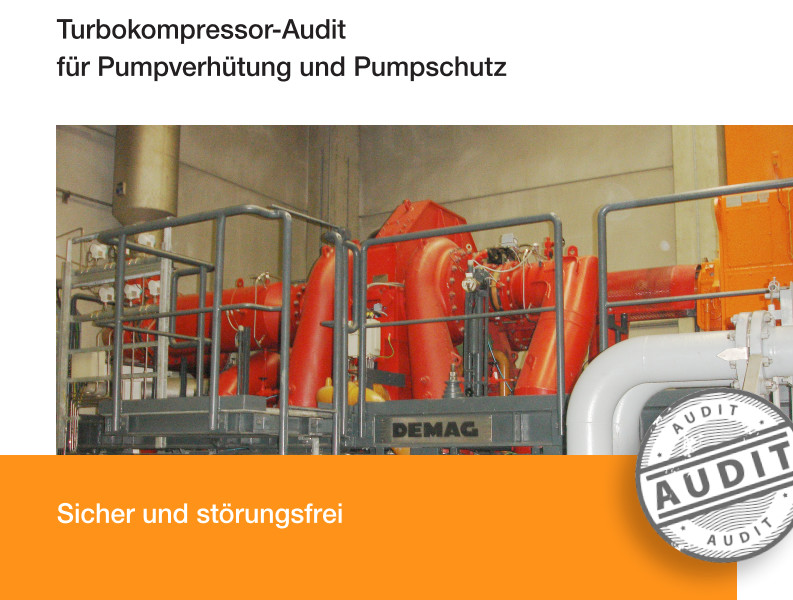
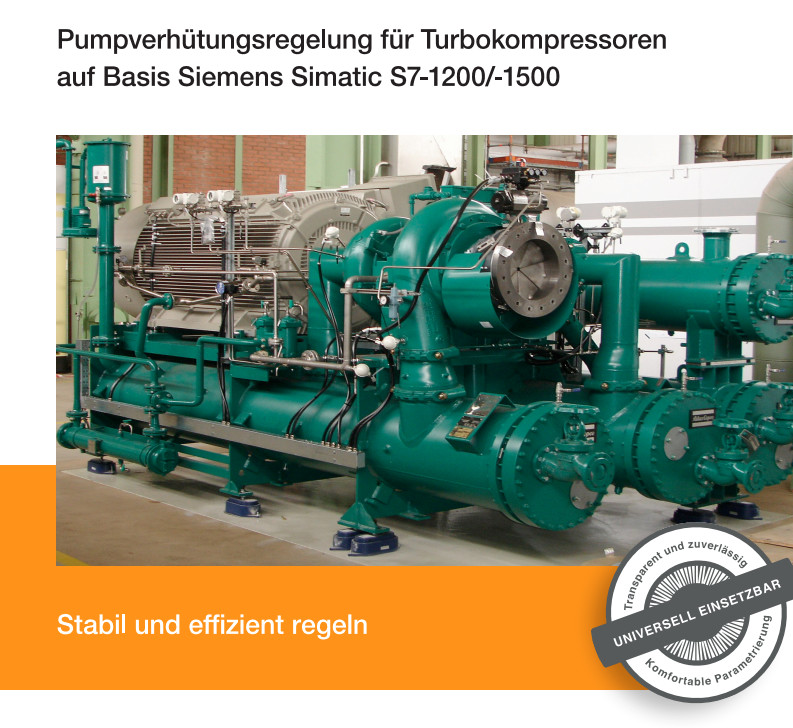
Relevant knowledge – explained concisely.
Our FAQs provide initial guidance. If you want to delve deeper, contact us – the real solutions emerge through dialogue.
The kmo reverse-flow protection is based on industry-proven control systems (Siemens S7-1200/-1500) and is implemented as a standalone protection function.
The evaluation is multi-channel and independent of the anti-surge control.
For reliable detection, several process variables are evaluated in parallel, e.g., volumetric flow rate (dp), pressures, temperatures, and power or current consumption.
Crucially, it's not just the absolute value that matters, but especially the rate of change of the signals.
Up to four transmitter signals are simultaneously monitored for surge-typical behavior.
This ensures reliable detection even with faulty or corrupted measured values – significantly exceeding the standard of classic limit value systems.
The control system operates in three stages:
- Partial opening for stabilization
- Full opening for safe relief
- Shutdown in critical conditions
An integrated diagnostic memory records the relevant signals before and after the event (typically: 200 seconds).
This allows the cause of surging to be analyzed in detail.
Integration is achieved via common interfaces such as Profibus, Modbus-TCP, or Ethernet.
The reverse-flow protection can be operated independently or integrated into existing automation systems.
Downloads
You can download product information here. Please feel free to contact us for any further inquiries!