
kmo oil pressure control valves
For over five decades, the oil pressure control valves of this design have been among the most reliable technology in oil supply systems. Mechanically robust, completely self-media controlled, and virtually maintenance-free – no electrics, no electronics. Ideal for operators who require stable, reproducible, and fault-tolerant pressure regulation.
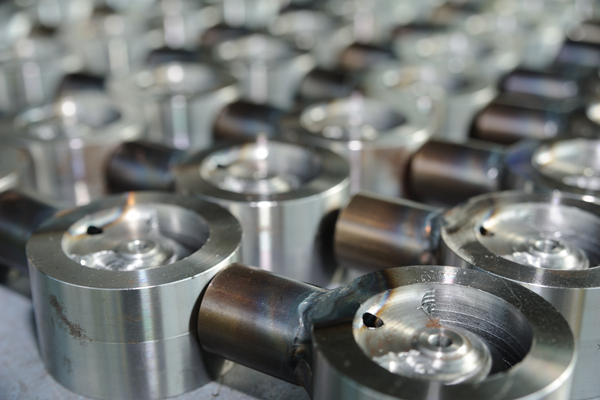
1. Overflow Valves (Low-Pressure Range)
1.1 Carbon Steel Versions (1-20 bar)
Overflow Valve
CC*ND/DN25-R
CC*ND/DN50-R
CC*ND/DN80-R
CC*ND/DN150-R
Overflow Valve with Test Screw
CC*ND/DN25-S
CC*ND/DN50-S
CC*ND/DN80-S
CC*ND/DN150-S
1.2 Carbon Steel Body / Stainless Steel Inter Parts (1-20 bar)
Overflow Valve
CS*ND/DN25-R
CS*ND/DN50-R
CS*ND/DN80-R
CS*ND/DN150-R
Overflow Valve with Test Screw
CS*ND/DN25-S
CS*ND/DN50-S
CS*ND/DN80-S
CS*ND/DN150-S
1.3 Stainless Steel Body and Inner Parts (1-16 bar)
Overflow Valve
SS*ND/DN25-R
SS*ND/DN50-R
SS*ND/DN80-R
SS*ND/DN150-R
2. Overflow Valves (High-Pressure Range)
2.1 Carbon Steel Versions (4-40 bar)
Overflow Valve
CC*HD/DN25-R
CC*HD/DN50-R
CC*HD/DN80-R
CC*HD/DN150-R
Overflow Valve with Test Screw
CC*HD/DN25-S
CC*HD/DN50-S
CC*HD/DN80-S
CC*HD/DN150-S
2.2 Carbon Steel Body / Stainless Steel Inner Parts (4-40 bar)
Overflow Valve
CS*HD/DN25-R
CS*HD/DN50-R
CS*HD/DN80-R
CS*HD/DN150-R
Overflow Valve with Test Screw
CS*HD/DN25-S
CS*HD/DN50-S
CS*HD/DN80-S
CS*HD/DN150-S
3. Pressure-Reducing Valves
3.1 Carbon Steel Versions (1-12 bar)
CC*ND/DN50-DM
CC*ND/DN80-DM
3.2 Carbon Steel Body / Stainless Steel Inner Parts (1-12 bar)
CS*ND/DN50-DM
CS*ND/DN80-DM
3.3 Stainless Steel Body and Inner Parts (1-12 bar)
SS*ND/DN50-DM
SS*ND/DN80-DM

Relevant knowledge – explained concisely.
Our FAQs provide initial guidance. If you want to delve deeper, contact us – the real solutions emerge through dialogue.
- Type R: Pressure relief valve for pressure regulation before the valve – without test plug.
- Type S: Like Type R, but with a test plug for functional testing during operation.
- Type DM: Pressure reducing valve for pressure regulation after the valve.
All types operate automatically without external power and are based on the same proven operating principle.
Because it is simple, robust, and fault-tolerant:
- purely mechanical, no electrical components
- self-regulating with stable proportional behavior
- resistant to operational disruptions
The design, based on the functional principle developed by Hans Kalb, was patented in 1968 by the then AEG-Kanis Turbinenfabrik GmbH. The basic principle has been in use for over 50 years and has since proven itself in thousands of applications.
Only clean lubricating oil (e.g. ISO VG 46).
Not suitable for:
- Gases
- Air
- Steam
- Water or other liquids
The valves operate with proportional control and are very stable – but only above a minimum flow rate.
- Below this minimum flow rate, the control becomes unstable
- The minimum flow rate is specified in the datasheet (at Δp = 1 bar)
- It is pressure-dependent and increases with √p
This is not a disadvantage, but rather a design characteristic and crucial for stable operation.
No – at least not in the traditional sense.
The valves are control valves, not safety valves:
- continuous opening (proportional behavior)
- no defined quick release
Although Type S is often used in practice "like a safety valve," it technically remains a control valve.
Minimal.
- no conventional wear parts
- all moving parts run in an oil bath
- virtually maintenance-free with clean oil
Via a mechanical adjustment screw:
- clockwise → pressure increases
- counter-clockwise → pressure decreases
Adjustment is always made during operation with a manometer
Only Type S offers an integrated testing capability:
- Slightly open the test screw
- Observe the pressure drop
- Close again
The function can be tested in this way, without changing the setpoint
All types (valve body + internal parts) are available in CC, CS, and SS variants – meaning:
as standard, entirely made of carbon steel (CC)
in a mixed construction (CS = valve body made of carbon steel and internal parts made of stainless steel)
or entirely in stainless steel (SS)
No, not as standalone pressure equipment.
- Designed in accordance with "Sound Engineering Practice" (Art. 4 Para. 3 PED)
- No CE marking required
- Integration into the overall system is crucial
Yes.
The valves are fully compatible with conventional designs and can be directly replaced in existing systems.
Typische Bereiche:
- DN 25, DN 50, DN 80 bis DN 150 (R/S)
- DN 50 und DN 80 (DM)
Durchfluss abhängig von:
- Nennweite
- Differenzdruck
- zulässiger Strömungsgeschwindigkeit (< 2,5 m/s empfohlen)
Die Auslegung erfolgt immer praxisnah über kvs-Werte und Betriebsbedingungen.
Downloads
You can download product information here. Please feel free to contact us for any further inquiries!